 Verdalyn
Common UK Vegetables and Their Composition
Educational Article | February 2026
Introduction
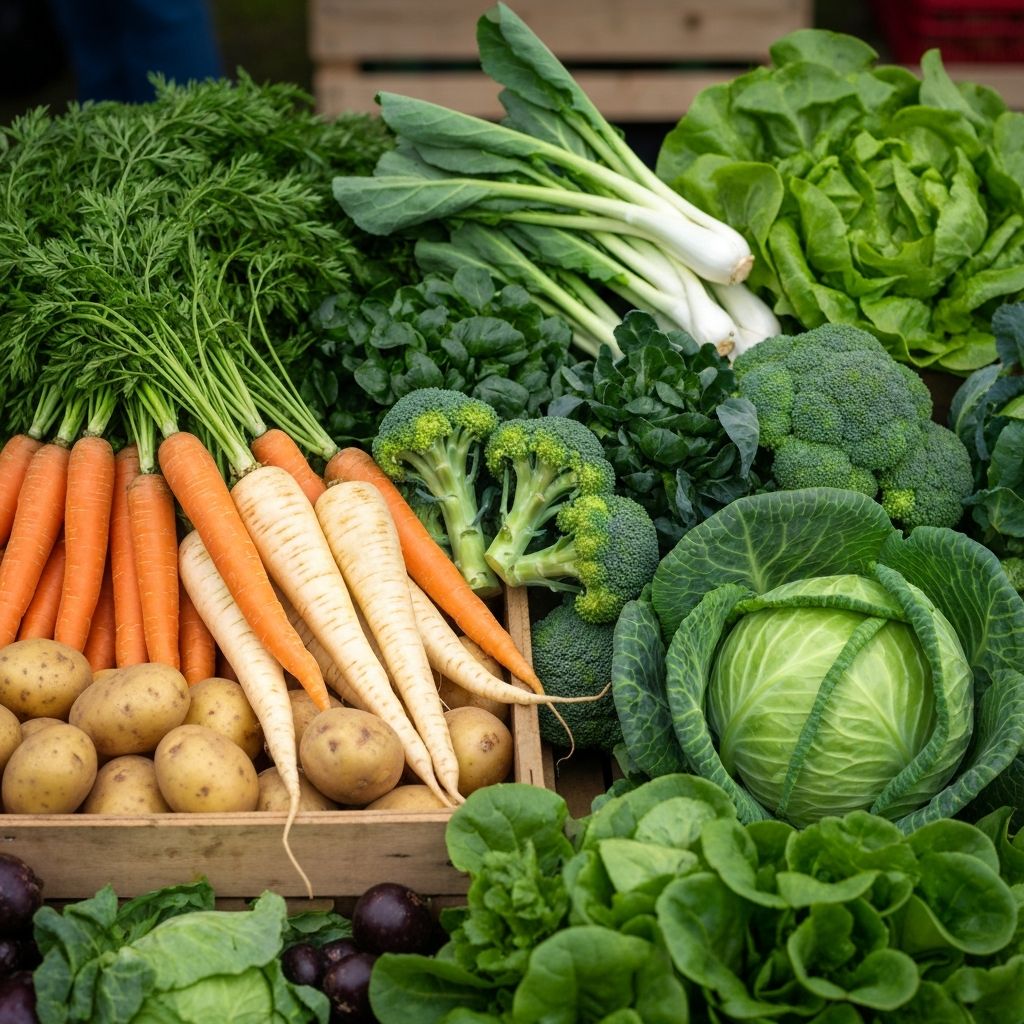
The United Kingdom has a rich vegetable cultivation and culinary tradition spanning centuries. Vegetables grow abundantly in British gardens, allotments, and commercial farms, with both traditional and contemporary varieties widely available. Understanding the composition and properties of commonly available UK vegetables provides context for their role in food culture and eating patterns.
Leafy Greens and Brassicas
Spinach
- Energy Density: 23 kcal/100g
- Water Content: 91%
- Fibre: 2.2g per 100g
- Key Nutrients: Iron, calcium, magnesium, vitamins A and K
- Culinary Use: Raw in salads, cooked as a side dish, in soups and casseroles
Broccoli
- Energy Density: 34 kcal/100g
- Water Content: 89%
- Fibre: 2.4g per 100g
- Key Nutrients: Vitamin C, folate, potassium, sulforaphane compounds
- Culinary Use: Steamed, roasted, in stir-fries, in soups and casseroles
Cabbage
- Energy Density: 25 kcal/100g
- Water Content: 92%
- Fibre: 2.4g per 100g
- Key Nutrients: Vitamin C, vitamin K, folate
- Culinary Use: Raw in coleslaw, roasted, boiled, in soups and stews
Lettuce
- Energy Density: 15 kcal/100g
- Water Content: 95%
- Fibre: 1.3g per 100g
- Key Nutrients: Folate, vitamins A and K
- Culinary Use: Raw in salads, as salad base, in sandwiches
Root Vegetables
Carrots
- Energy Density: 41 kcal/100g
- Water Content: 88%
- Fibre: 2.8g per 100g
- Key Nutrients: Beta-carotene, potassium, vitamin K
- Culinary Use: Raw as crudités, roasted, in soups, stews, and casseroles
Potatoes
- Energy Density: 77 kcal/100g (boiled)
- Water Content: 79%
- Fibre: 1.1g per 100g
- Key Nutrients: Potassium, vitamin B6, vitamin C, manganese
- Culinary Use: Boiled, roasted, mashed, baked, fried, in soups and stews
Onions
- Energy Density: 40 kcal/100g
- Water Content: 89%
- Fibre: 1.7g per 100g
- Key Nutrients: Vitamin C, manganese, folate, quercetin compounds
- Culinary Use: Base for soups and stews, roasted, in curries and stir-fries, caramelised
Fruiting Vegetables
Tomatoes
- Energy Density: 18 kcal/100g
- Water Content: 95%
- Fibre: 1.2g per 100g
- Key Nutrients: Vitamin C, lycopene, potassium
- Culinary Use: Raw in salads, in sauces, soups, stews, cooked dishes
Peppers (Bell Peppers)
- Energy Density: 31 kcal/100g
- Water Content: 92%
- Fibre: 1.9g per 100g
- Key Nutrients: Vitamin C, vitamin A, potassium
- Culinary Use: Raw in salads, roasted, in stir-fries, stuffed, in curries
Cruciferous Vegetables
Cauliflower
- Energy Density: 25 kcal/100g
- Water Content: 92%
- Fibre: 2.4g per 100g
- Key Nutrients: Vitamin C, folate, potassium
- Culinary Use: Steamed, roasted, in curries, in soups and gratins
Brussels Sprouts
- Energy Density: 43 kcal/100g
- Water Content: 86%
- Fibre: 2.4g per 100g
- Key Nutrients: Vitamin C, vitamin K, folate
- Culinary Use: Roasted, boiled, in stir-fries, with bacon or nuts
Other Common UK Vegetables
Celery
- Energy Density: 16 kcal/100g
- Water Content: 95%
- Fibre: 1.6g per 100g
- Culinary Use: Raw as crudités, in soups, stocks, stews, as aromatic base
Courgettes
- Energy Density: 17 kcal/100g
- Water Content: 95%
- Fibre: 1.1g per 100g
- Culinary Use: Roasted, fried, grilled, in ratatouille, in pasta dishes
Peas
- Energy Density: 81 kcal/100g (cooked)
- Water Content: 79%
- Fibre: 5.7g per 100g
- Key Nutrients: Protein, fibre, vitamins A and K
- Culinary Use: Boiled, frozen, in stews, curries, rice dishes, soups
Seasonal Availability in the UK
Vegetable availability in the United Kingdom varies seasonally. Traditional British gardening and allotment culture reflects these seasonal patterns:
- Spring: Peas, asparagus, spring onions, early potatoes
- Summer: Courgettes, tomatoes, peppers, beans, cucumbers, lettuce
- Autumn: Carrots, onions, squash, cabbage, broccoli, cauliflower
- Winter: Root vegetables, cabbage, Brussels sprouts, leafy greens
Composition Databases and References
The compositional information on UK vegetables is documented in comprehensive food composition databases including:
- UK Food Standards Agency (FSA) composition data
- USDA FoodData Central
- McCance and Widdowson's The Composition of Foods
- European Food Safety Authority databases
Conclusion
UK vegetables represent diverse plant foods with varying but generally low energy density, high water content, significant fibre, and substantial micronutrient contributions. These vegetables form the foundation of British vegetable gardening, farmers' markets, and culinary traditions. Understanding the composition of commonly available vegetables provides context for their nutritional properties and their role in traditional and contemporary British food culture.
Educational Disclaimer
This article provides educational information about the composition of common UK vegetables. It is not intended as dietary recommendations or nutritional advice. For personal nutrition guidance, consult qualified nutrition or health professionals.