 Verdalyn
Energy Density Comparisons Across Food Groups
Educational Article | February 2026
Introduction
Energy density—the amount of energy (calories) relative to the weight of food—is a fundamental concept in nutritional science. Understanding how different food groups compare in terms of energy density provides important context for understanding the role of vegetables in human eating patterns and food composition.
What Is Energy Density?
Energy density is calculated as the number of calories in a given weight of food, typically expressed as kilocalories per 100 grams (kcal/100g). The formula is straightforward:
Energy Density = Total Calories ÷ Total Weight
This concept is important because it describes the relative concentration of energy (calories) in foods. A food with high energy density provides many calories in a small amount of weight. A food with low energy density provides few calories in a larger amount of weight.
Factors Influencing Energy Density
Several food composition factors determine the energy density of different foods:
- Water Content: Water contributes weight without contributing calories, lowering energy density
- Fat Content: Fat is the most energy-dense macronutrient (9 calories per gram), significantly raising energy density
- Carbohydrate Content: Carbohydrates provide 4 calories per gram
- Protein Content: Protein provides 4 calories per gram
- Fibre Content: Fibre contributes minimal calories, contributing to lower energy density
Energy Density Across Food Groups
Different food categories naturally fall into distinct energy density ranges based on their typical composition:
Very Low Energy Density (0-100 kcal/100g)
- Non-starchy vegetables: 15-40 kcal/100g (lettuce, broccoli, tomatoes, cucumbers)
- Most fruits: 40-60 kcal/100g (apples, berries, oranges)
- Legumes (cooked): 80-130 kcal/100g (lentils, chickpeas, beans)
Low-Moderate Energy Density (100-200 kcal/100g)
- Grains (cooked): 100-150 kcal/100g (rice, pasta, bread)
- Lean protein sources: 120-200 kcal/100g (chicken breast, fish, lean meats)
- Starchy vegetables: 60-100 kcal/100g (potatoes, corn, peas)
High Energy Density (200-600 kcal/100g)
- Fatty meats: 250-400 kcal/100g (fatty cuts, processed meats)
- Cheese and full-fat dairy: 300-400 kcal/100g
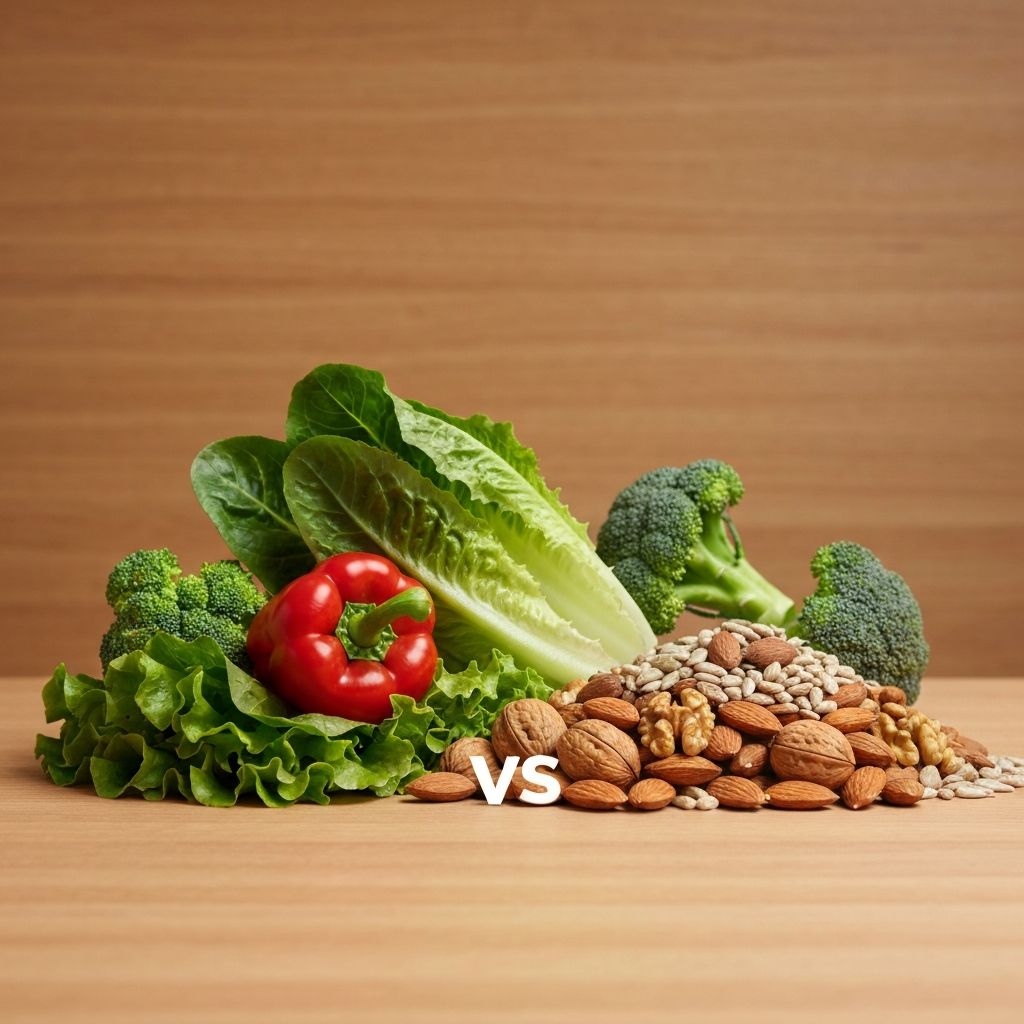
- Nuts and seeds: 500-650 kcal/100g
Very High Energy Density (>600 kcal/100g)
- Oils and fats: 900 kcal/100g (olive oil, butter, vegetable oils)
- Pure fat sources: approximately 900 kcal/100g
Energy Density of Common Vegetables
Vegetables occupy the very low energy density category, a position determined largely by their high water and fibre content and low fat content. Examples of vegetables and their energy density include:
- Leafy Greens (spinach, lettuce, kale): 15-25 kcal/100g
- Cruciferous Vegetables (broccoli, cauliflower): 25-35 kcal/100g
- Watery Vegetables (cucumbers, tomatoes): 15-20 kcal/100g
- Root Vegetables (carrots, turnips): 30-50 kcal/100g
- Peppers and Onions: 30-40 kcal/100g
Volume Implications of Energy Density
A fundamental consequence of energy density differences is that vastly different volumes of food can contain equivalent calories:
Example Comparison: To obtain 100 calories from different foods requires:
- Approximately 600g of raw lettuce
- Approximately 250g of cooked broccoli
- Approximately 100g of cooked rice
- Approximately 30g of olive oil
- Approximately 20g of nuts
This illustrates the dramatic difference in portion size required to obtain the same energy from foods of different energy densities.
Energy Density in Meal Composition
The energy density of foods influences meal composition when foods are combined. A meal composed primarily of low-energy-density vegetables and lean proteins combined with whole grains will have different overall energy density than a meal composed primarily of high-energy-density foods.
In nutritional research, meal-based energy density (the energy density of an entire meal rather than individual foods) has been examined as a factor in eating behaviour and energy intake patterns.
Practical Applications in Food Science
Understanding energy density is important in food science and nutrition for several reasons:
- Understanding the relative nutritional position of different foods
- Meal planning and food composition analysis
- Understanding satiety research and food volume effects
- Nutritional composition databases and food labelling
- Restaurant and food service menu analysis
Individual Responses and Energy Density
While energy density is a measurable and objective property of foods, individual responses to foods of different energy densities vary considerably. Factors affecting how different people respond to low or high energy density foods include:
- Food preferences and palatability perceptions
- Satiety and hunger signals
- Portion size perception and eating quantity
- Psychological and environmental eating factors
- Overall diet composition and eating patterns
Limitations of Energy Density as a Concept
While energy density is a useful descriptive property of foods, it is important to recognize its limitations. Energy density alone does not determine:
- Overall nutrition quality or micronutrient contribution
- Individual satiety or appetite responses
- Long-term eating patterns or food choices
- Health outcomes of any kind
Conclusion
Energy density is a fundamental property of foods determined by their water, fat, carbohydrate, and fibre content. Vegetables occupy the very low energy density category, providing substantial weight and volume with minimal caloric content. Understanding energy density across food groups provides important context for understanding food composition and the role of different foods in human nutrition. However, energy density is one of many factors influencing eating behaviour and should be understood in context with other nutritional properties and individual variation.
Educational Disclaimer
This article provides educational information about energy density as a food property. It is not intended as dietary advice or recommendations for food choices. Individual factors including health status, personal preferences, and overall lifestyle influence appropriate dietary choices. For personal nutrition guidance, consult qualified nutrition or health professionals.